Graphical BlackJack: Adding Game Logic
Introduction
In the original text based version of this game there was a considerable amount of game logic. The game would proceed in the following fashion:
- Game Start Up
- Player Enters Bet
- Initial Hands for Player and Dealer are displayed
- Player decides to Hit or Stand (This is looping code the player can Hit until the hand Busts or the Player presses Stand or the Hand = 21)
- The Dealer hand his played using the rule dealer must hit 16 or under
- The Hands are scored the closest to 21 without going over wins. Ties mean the bet money is returned and player starts a new hand
- Go back to step 2.
- Player quits by pressing the Windows red "X" button
Most of the above logic can be cut and pasted into the actionPerformed method with little revision. There will some Button handling things to add.
- When the game starts the Hit and Stand buttons are disabled and the Bet button is enabled
- After the Bet is placed the Bet button is disabled and the Hit and Stand buttons are enabled
- When the stand button is pressed or the hand is bust or at 21 and before the dealer logic is started the Hit and Stand buttons are disabled.
- After the winner is determined and it's time for a new round the Bet button needs to be enabled again.
JTextField problems
There is the issue (it's been ignored for a while) that the JTextField where the user enters the Bet amount needs to be enlarged. Currently it is appearing so small that when the user clicks in it to type something nothing appears. A simple call to the JTextField's setPreferredSize method placed in the BlackJack run method before the JTextField gets added for diplay will fix this:
- betField.setPreferredSize(new Dimension(75,25));
Ouput
Start Up
- Bet button active
- nothing to be done the default state for a created JButton is Enabled = true
- hit and stand inactive
- add hitButton.setEnabled(false) and same for standButton
- This is placed in run method after the buttons are created
- Enter JTextField value and press bet
- deactivate bet button
- activate hit and stand
- if no value entered in JTextField or non-numeric entered clear JTextField and leave bet button active and essentially do nothing until the user enters something meaningful (a try-catch block is used to capture this)
- These changes are added to the actionPerformed method (check if "bet" action command has come in)
Code Changes to BlackJack
public void actionPerformed(ActionEvent ae) {
    if ("hit".equals(ae.getActionCommand())) {
        // Hit button press add a card to the player hand then redisplay frame
        this.player.deal(this.card);

        // Once the card is added you need to revalidate the frame and repaint
        frame.validate();
        frame.repaint();
    }
    if ("bet".equals(ae.getActionCommand())) {
        String betStr = betField.getText();
        try {
            this.bet = Integer.parseInt(betStr);
        }
        catch (Exception ex) {
            // set bet = 0 and reset the JTextField to empty the box of bad text
            // return (do nothing user entered invalid text)
            // At some point need to add a Message display to window to
            // Inform the user of problems
            betField.setText("");
            bet = 0;
            return;
        }
        // Bet is an int so go ahead and deactivate Bet Button enable hit and stand
        betButton.setEnabled(false);
        hitButton.setEnabled(true);
        standButton.setEnabled(true);
        frame.validate();
        frame.repaint();
    }
}

/**
 * run method that does all the work of this class
 */
@Override
public void run() {
    Container contentPane = frame.getContentPane();


    // Set the layout manager for the JFrame using the contentPaine
    FlowLayout layout = new FlowLayout();
    contentPane.setLayout(layout);

    frame.setDefaultCloseOperation(JFrame.EXIT_ON_CLOSE);
    frame.setPreferredSize(new Dimension(300,500));

    // Need a label for the JTextField
    JLabel betLabel = new JLabel("Bet Amount:");

    // set the different Action Command Strings
    betButton.setActionCommand("bet");
    hitButton.setActionCommand("hit");
    standButton.setActionCommand("stand");

    // set this BlackJack class as the handler for each of the buttons
    betButton.addActionListener(this);
    hitButton.addActionListener(this);
    standButton.addActionListener(this);

    // Disable Hit and Stand buttons
    hitButton.setEnabled(false);
    standButton.setEnabled(false);

    // Set size of the bet JTextField
    betField.setPreferredSize(new Dimension(75,25));
Output
Here is the start up screen notice the hit and stand buttons are greyed out.
The user has also entered "abc" for the bet amount

After pressing the Bet button on the bad bet text the JTextField is reset and
the bet Button remains active with the other buttons inactive.

Entering a number in the bet field and pressing the Bet button, the Bet button becomes inactivated, and the hit and stand buttons are now active .img/BlackJackAfterGoodBet.png
There are still a couple of issues lingering with this user input. The bet field is an int type. It can take on negative numbers which would mean that the user would get paid if they lose the hand. This can be handled by taking the absolute value of the entry or resetting and forcing the user to reenter.
The player can also enter 0 as a valid bet. So the second way above for handling a bad bet is probably the easiest. Just test for input less than or equal to 0 and reset if it is.
One more problem that is not dealt with is the fact that a bet is not checked against the bankroll. Losing all your money means your done playing in Vegas it may be a good thing to do here. But this problem will be deferred until later.
The following code added after the exception handling block (ie. try-catch) should fix the problems
// Check if bet is less than or equal to 0 and reset if it is
if (bet <= 0) {
    betField.setText("");
    bet = 0;
    return;
}
Add in Game Logic
While weaving in the game logic it became apparent that there is a need to have a message display and a continue button. Otherwise when the hands are scored the program will cause the hands to disappear (or at least that is the functionality you want) and the Player won't know what the status of the hand is and feel the program is cheating.
There also needs to be a screen area set aside to display the bankroll. That is how the Player determines how well they are doing. The JLabel will suffice for displaying text. Two more will be added one for an informational display and one for the Bankroll. We may want to place the bankroll JLabel inside a JPanel so it can have a titled border.
What was changed?
- Added fields into BlackJack class for the continue button and the extra labels
- Set the dimensions of the player hand and the dealer hand. This helps in maintaining the window at a constant size when there are no cards in the hand yet
- Added a handleDealer method to do the game logic for the dealer's hand and scoring for determining win or lose
- Added a resetFrame method to start a new round with no cards in the hands
- remove all the swing objects from frame with a call to the ContentPane.removeAll method
- then add back all the elements just like what happens at start up
- worked the logic into actionPerformed
- when to activate continue button and deactivate the others
- The buttons keep the state of the game by being activated or deactivated
- Moved some of the elements around to prepare for using a better Layout Manager than FlowLayout in the future
- Got rid of all the text output method calls. Everything happens on the screen
Code for BlackJack
/*
 * BlackJack a simple implementation upgrade for graphical card display
 */
package blackjack;

import java.awt.Container;
import java.awt.Dimension;
import java.awt.FlowLayout;
import java.awt.event.ActionEvent;
import java.awt.event.ActionListener;
import java.io.IOException;
import java.net.MalformedURLException;

import javax.swing.JButton;
import javax.swing.JFrame;
import javax.swing.JLabel;
import javax.swing.JTextField;
import javax.swing.SwingUtilities;

/**
 * This class controls the game logic of this simple implementation of
 * Black Jack. A more profession version would allow for multiplayer games
 * via a game server so you could play your friends on the internet.
 * Some improvements would be:
 * <p>
 *    Adding insurance (players could insure bets against a dealer having blackjack) <p>
 *    Increase the payout for a blackjack hand to 1.5 x the original bet <p>
 *    Double Down <p>
 *    Splitting pairs <p>
 *
 * @author Nasty Old Dog
 */
public class BlackJack implements ActionListener, Runnable {

    int bankroll = 1000;
    int bet = 0;
    CardDeck card;
    Hand player;
    Hand dealer;
    BlackJackStrategy strategy = new BlackJackStrategy();
    JFrame frame = new JFrame("BlackJack");
    JButton hitButton = new JButton("Hit");
    JButton standButton = new JButton("Stand");
    JButton betButton = new JButton("Bet");
    JButton continueButton = new JButton("Continue");
    JLabel bankLabel = new JLabel("Bankroll: " + bankroll);
    JLabel infoLabel = new JLabel("Welcome to BlackJack");
    JTextField betField = new JTextField();
    // Need a label for the JTextField
    JLabel betLabel = new JLabel("Bet Amount:");

    public BlackJack() {
        this.card = new CardDeck(this.strategy);
    }

    /**
     * handles the Dealer hand playing logic
     */
    public void handleDealer(int pscr) {
        int dscr = 0;
        String msg = "Player score: " + pscr + "   Dealer: " + dscr;
        if (pscr > 21) {
            msg = msg + ": BUST LOSER!!!";
            bankroll -= bet;
        } else {
            for (dscr = dealer.scoreHand();
                    dscr < 17;
                    dscr = dealer.scoreHand()) {
                this.dealer.deal(card);
            }

            // Code to score the game and settle the bet will go here
            if (pscr > dscr) {
                msg = msg + ": You Win!!!";
                bankroll = bankroll + bet;
            } else if (dscr > 21) {
                msg = msg + ": You Win!! Dealer has BUSTED";
                bankroll += bet;
            } else if (pscr == dscr) {
                msg = msg + ": PUSH";
            } else {
                msg = msg + ": LOSER!!!";
                bankroll -= bet;
            }
        }

        // Print message about who won. Then wait for continue button to be
        // pressed so user can have time to look at cards and verify the
        // situattion
        infoLabel.setText(msg);
        betButton.setEnabled(false);
        hitButton.setEnabled(false);
        standButton.setEnabled(false);
        continueButton.setEnabled(true);
        frame.validate();
        frame.repaint();
    }

    /**
     * Handles all the graphics user input
     * @param ae ActionEvent generated by JButtons in the frame
     */
    @Override
    public void actionPerformed(ActionEvent ae) {
        if ("hit".equals(ae.getActionCommand())) {
            // Hit button press add a card to the player hand then redisplay frame
            this.player.deal(this.card);

            // Once the card is added you need to revalidate the frame and repaint
            frame.validate();
            frame.repaint();
            int scr = this.player.scoreHand();
            if (scr > 21) {
                // Player has gone bust display a message and activate continue button
                bankroll -= bet;
                this.handleDealer(scr);
            }
            if (scr == 21) {
                // Player has 21 and will win if dealer has <21 or bust
                this.handleDealer(scr);

            }
            // Otherwise do nothing player decides whether to hit or stand
        }
        if ("stand".equals(ae.getActionCommand())) {
            // Player is done getting cards time to do the dealer stuff
            this.handleDealer(this.player.scoreHand());
            betButton.setEnabled(false);
            standButton.setEnabled(false);
            betButton.setEnabled(false);
            continueButton.setEnabled(true);

        }
        if ("bet".equals(ae.getActionCommand())) {
            String betStr = betField.getText();
            try {
                this.bet = Integer.parseInt(betStr);
            } catch (Exception ex) {
                // set bet = 0 and reset the JTextField to empty the box of bad text
                // return (do nothing user entered invalid text)
                // At some point need to add a Message display to window to
                // Inform the user of problems
                betField.setText("");
                bet = 0;
                return;
            }

            // Check if bet is less than or equal to 0 and reset if it is
            if (bet <= 0) {
                betField.setText("");
                bet = 0;
                return;
            }

            // Bet is an int so go ahead and deactivate Bet Button enable hit and stand
            betButton.setEnabled(false);
            hitButton.setEnabled(true);
            standButton.setEnabled(true);
            player.deal(this.card);
            dealer.deal(this.card);
            player.deal(this.card);
            dealer.deal(this.card);
            frame.validate();
            frame.repaint();
        }
        if ("continue".equals(ae.getActionCommand())) {
            betButton.setEnabled(true);
            hitButton.setEnabled(false);
            standButton.setEnabled(false);
            continueButton.setEnabled(false);
            bankLabel.setText("Bankroll: " + bankroll);
            infoLabel.setText("Welcome to BlackJack, Place your bet!");
            betField.setText("");
            bet = 0;
            player = new Hand("Player");
            dealer = new Hand("Dealer");
            this.resetFrame();
        }
    }

    /**
     * This reset the entire frame and reloads all the displayable objects in
     * the proper order
     */
    public void resetFrame() {
        frame.getContentPane().removeAll();
        player.setPreferredSize(new Dimension(500,150));
        dealer.setPreferredSize(new Dimension(500,150));

        frame.add(infoLabel);
        frame.add(dealer);
        frame.add(player);
        frame.add(hitButton);
        frame.add(standButton);
        frame.add(continueButton);
        frame.add(betLabel);
        frame.add(betField);
        frame.add(betButton);
        frame.add(bankLabel);
        frame.validate();
        frame.repaint();
    }

    /**
     * run method that does all the work of this class
     */
    @Override
    public void run() {
        Container contentPane = frame.getContentPane();


        // Set the layout manager for the JFrame using the contentPaine
        FlowLayout layout = new FlowLayout();
        contentPane.setLayout(layout);

        frame.setDefaultCloseOperation(JFrame.EXIT_ON_CLOSE);
        frame.setPreferredSize(new Dimension(550, 450));


        // set the different Action Command Strings
        betButton.setActionCommand("bet");
        hitButton.setActionCommand("hit");
        standButton.setActionCommand("stand");
        continueButton.setActionCommand("continue");

        // set this BlackJack class as the handler for each of the buttons
        betButton.addActionListener(this);
        hitButton.addActionListener(this);
        standButton.addActionListener(this);
        continueButton.addActionListener(this);

        // Disable Hit and Stand buttons
        hitButton.setEnabled(false);
        standButton.setEnabled(false);
        continueButton.setEnabled(false);

        // Set size of the bet JTextField
        betField.setPreferredSize(new Dimension(75, 25));

        // Set up some hands
        player = new Hand("Player");
        dealer = new Hand("Dealer");

        // Set a preferred size for the Hand JPanel
        player.setPreferredSize(new Dimension(500,150));
        dealer.setPreferredSize(new Dimension(500,150));

        // Add all the objects into the fram so they can be displayed
        frame.add(dealer);
        frame.add(player);
        frame.add(hitButton);
        frame.add(standButton);
        frame.add(betLabel);
        frame.add(betField);
        frame.add(betButton);
        frame.add(bankLabel);
        frame.add(infoLabel);
        frame.add(continueButton);
        frame.pack();
        frame.setVisible(true);
    }

    /**
     * @param args the command line arguments
     */
    public static void main(String[] args) {
        try {
            CardImageFactory.initCardImageFactory("http://www.jfitz.com/cards/classic-playing-cards.png");
            BlackJack game = new BlackJack();

            SwingUtilities.invokeLater(game);
        } catch (MalformedURLException ex) {
            System.out.println(ex.getMessage());
        } catch (IOException ex) {
            System.out.println(ex.getMessage());
        }
    }
}
There were a bunch of changes and code has been woven in all over the place. The coding happened fast and furious, rather than upset the train of thought I plowed through it. Hopefully the reader can match up code to functionality on the screen.
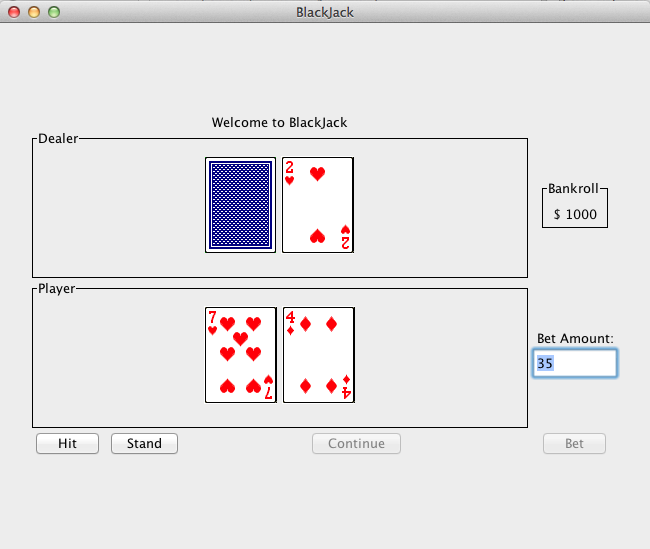
Output at Startup
The start up screen now looks like this:

Output after round played
After User finishes a round then the Continue Button is active:

Full Code
Conclusion
This is almost complete. It now plays a game of BlackJack but there are some small things missing. There are also some Graphics design issues that need to be addressed
- BlackJack logic
- Need to shuffle the cards.
- Need to track how many cards have been used and reshuffle when the CardDeck is low
- Graphics fixes
- Need a better Layout Manager that fixes the objects displayed in a more fixed fashion
- The message label should be at the top of the screen where it will be noticed more
- The continue button should go along side the Hit and Stand Buttons
- The bankroll display should be enhanced to be in a JPanel with a title border and the amount inside the JPanel as a JLabel
- It would be nice to have the bankroll display and bet amount controls on the right hand side of the screen. Maybe when the Layout Manager is fixed this will be easy to do.


